
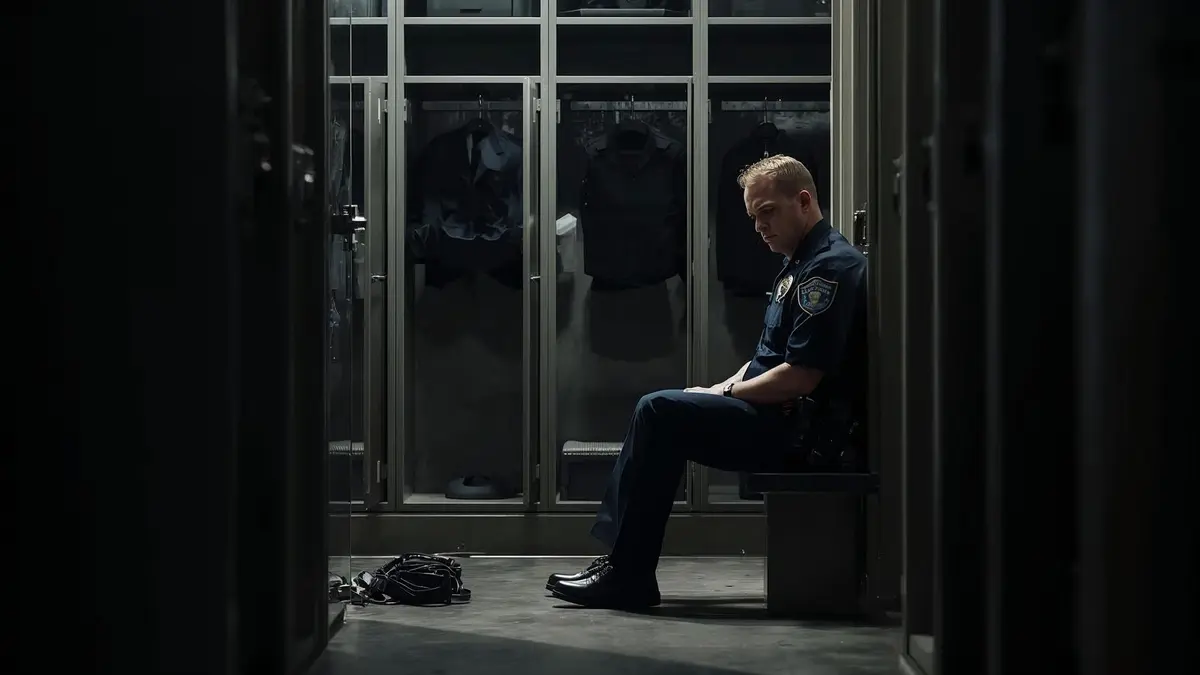
Law enforcement talks about wellness constantly. It appears in policies, trainings, conference agendas, and leadership statements. It is framed as a cultural value, something good organizations believe in and responsible leaders support. And yet, despite how familiar the language has become, the lived experience of the job tells a different story.
This is not because leaders do not care, and it is not because officers lack resilience. It is because wellness has been positioned as an add-on to a system that continues to generate predictable harm. We acknowledge the demands of policing openly, shift work, chronic stress, repeated exposure to trauma, sustained vigilance, but we stop short of designing organizations that meaningfully protect the people performing that work over decades. Instead, we rely on individuals to manage the consequences.
Most wellness efforts today are framed around access. Access to an employee assistance program. Access to peer support. Access to counseling after a critical incident. These resources matter, and in many cases they help. But access is not the same thing as architecture. Offering support after harm has accumulated is not the same as building a system designed to reduce that harm in the first place. That distinction is where the current model fails.
Policing is not a short-term stress exposure. It is cumulative. Sleep disruption compounds year after year. Stress hormones remain elevated. Inflammation becomes background noise. Cardiovascular risk increases quietly. Emotional suppression becomes normalized as professionalism. Physical pain is absorbed and minimized. Physical training, when it exists, is often inconsistent or treated as a liability rather than a protective factor. None of this is controversial. It is well documented. What is missing is not awareness, but structural response.
Nowhere is this clearer than in how we handle critical incidents. After particularly disturbing calls, agencies deploy peer support teams or crisis resources. These interventions can be valuable, but their prominence reveals the limits of our approach. We intervene after exposure, after accumulation, after the nervous system has already absorbed the impact. Prevention, when it exists at all, is informal, uneven, and largely disconnected from how the job is scheduled, supervised, and sustained.
To be clear, no one is suggesting that trauma can be eliminated from policing. Critical incidents are inherent to the work. Officers will continue to encounter death, violence, and human suffering. That reality is not in dispute. The failure is what happens around those events.
Prevention in this context does not mean avoiding traumatic calls. It means reducing the downstream damage they predictably cause. It means not sending exhausted officers from one high-impact incident directly into another without recovery. It means recognizing that repeated exposure without structured decompression compounds physiological stress, degrades sleep and judgment, and increases long-term harm, even when officers appear to “handle it” professionally.
What we have normalized instead is a model in which officers are expected to absorb critical incidents as isolated events, return immediately to full operational tempo, and seek support only once the cumulative effects become impossible to ignore. That is not resilience. It is deferred cost.
We have accepted a model in which officers are expected to absorb degradation quietly until it becomes visible enough to require intervention.
What makes this more striking is that we already know how to do something different.
In other high-risk professions, aviation, trauma medicine, elite military units, readiness is treated as an institutional responsibility rather than an individual trait. Human performance is supported deliberately. Recovery is planned, not improvised. Health is monitored over time, not just cleared episodically. The expectation is not that people will simply endure indefinitely, but that systems will be designed to sustain them.
In policing, we continue to frame wellness as a cultural aspiration, something leaders encourage and officers pursue if they feel the need, rather than as operational infrastructure. We talk about resilience while ignoring physiology. We emphasize mindset while overlooking sleep, cardiovascular strain, metabolic health, chronic pain, and nervous system regulation. We treat mental health as if it exists separately from the body that carries it.
A serious approach would start from a different premise: that the job itself creates predictable physiological strain, and that mitigating that strain is part of organizational responsibility. That means moving beyond annual, compliance-driven physicals (if done at all) toward longitudinal health awareness. It means treating sleep as a safety variable rather than a lifestyle choice. It means recognizing recovery as essential to sustained performance, not as indulgence or weakness.
It also means being honest about the cost of doing nothing upstream. Avoiding structural change is often easier, cheaper, and quieter, until the consequences surface as injuries, errors, early retirements, or crises. Doing nothing is not a neutral choice. It is a decision to let predictable degradation continue unchecked.
What a Serious Sustainment System Actually Looks Like
A serious sustainment model does not begin with tools or programs. It begins with fundamentals. Only after those fundamentals are addressed do targeted interventions make sense. Without that hierarchy, even well-intentioned, evidence-based efforts become performative.
The foundation is sleep. Not as a wellness slogan, but as a safety variable. In serious systems, sleep is not managed by telling people to “get more rest.” It is addressed through structure. Patterns of chronic disruption are identified over time, not through self-reporting or discipline, but by recognizing known risk points: extended overtime, court scheduling, rotating shifts, consecutive night work, and prolonged exposure to high-stress operations.
When disruption is unavoidable, as it often is in policing, the response is not denial, but sequencing. High-impact assignments are followed by predictable recovery periods. Prolonged operations are paired with reduced cognitive and physical demands afterward. Supervisors are trained to recognize when fatigue is a performance risk, not an attitude problem, and schedules are adjusted accordingly. This does not require perfect rest. It requires acknowledging that depleted officers do not recover simply because a shift ends.
The underlying assumption is straightforward: judgment, emotional regulation, and reaction time degrade quietly and progressively. By the time impairment is visible, risk has already increased. Systems that take sleep seriously do not wait for failure to intervene, they design work in a way that limits cumulative damage before it becomes obvious.
From there, attention turns to the nervous system, where much of what we casually label “mental health” actually lives. Chronic exposure to threat and vigilance pushes the body into a sustained fight-or-flight state. Over time, that state becomes baseline. Serious systems do not expect people to reason their way out of that physiology. They intervene directly, using methods designed to regulate the body rather than simply reframe experience.
One such method used in other high-stress professions is heart rate variability–based training. This involves controlled breathing patterns that influence autonomic nervous system function. It is not meditation as a coping exercise. It is a measurable, repeatable physiological intervention intended to restore balance after prolonged stress. The emphasis is on regulation, not reflection, and on consistency rather than personal preference.
Sustainment systems also recognize that chronic pain is not a separate or secondary issue. Pain disrupts sleep. Poor sleep erodes patience, mood, and judgment. Left unaddressed, pain becomes normalized, then internalized, and eventually identity-shaping. In serious environments, pain is managed early as a performance and longevity issue, not ignored until it becomes a claim, a restriction, or a crisis.
Physical conditioning plays a role here as well, but not in the way it is often treated in policing. The goal is not fitness as punishment, image, or discipline. It is training designed to reduce injury, support the physical demands of the job, and preserve cardiovascular health under chronic stress. When physical preparation is treated as optional, inconsistent, or risky, organizations absorb the downstream costs in injuries, disability, and attrition.
Equally important is cognitive load. In elite environments, unnecessary decision-making is deliberately reduced. Policies, procedures, and administrative demands are structured to preserve cognitive bandwidth rather than consume it. This is not about simplifying the work or lowering standards. It is about recognizing that judgment under stress is a finite resource, and designing systems that protect it.
Recovery, in serious systems, is not the same as rest, and it is not left to chance. While sleep addresses ongoing fatigue, recovery addresses known physiological cost after high-stress exposure. After prolonged operations or critical incidents, decompression is built deliberately into the work sequence. Not because individuals request it, but because the system anticipates impact.
This does not mean extended leave or reduced standards. It means adjusting tempo after known strain: limiting consecutive high-stress assignments, reducing cognitive load temporarily, and creating space for the nervous system to down-regulate before returning to full operational demand. Recovery is treated as part of the operational cycle itself. Not a reward, not a benefit, and not a remedial service, but a requirement for sustained performance.
What ties all of this together is not any single tool or technique, but the philosophy behind them. These systems do not expect people to endure indefinitely and seek help only once they can no longer cope. They assume that prolonged exposure to stress carries predictable biological costs, and they take responsibility for managing those costs before they surface as injuries, errors, or crises.
Wellness without teeth allows organizations to speak the language of care while leaving the system itself unchanged. Until we are willing to make that shift, “officer wellness” will remain a familiar phrase that asks individuals to manage the consequences of a system that refuses to fully reckon with what the job demands.