
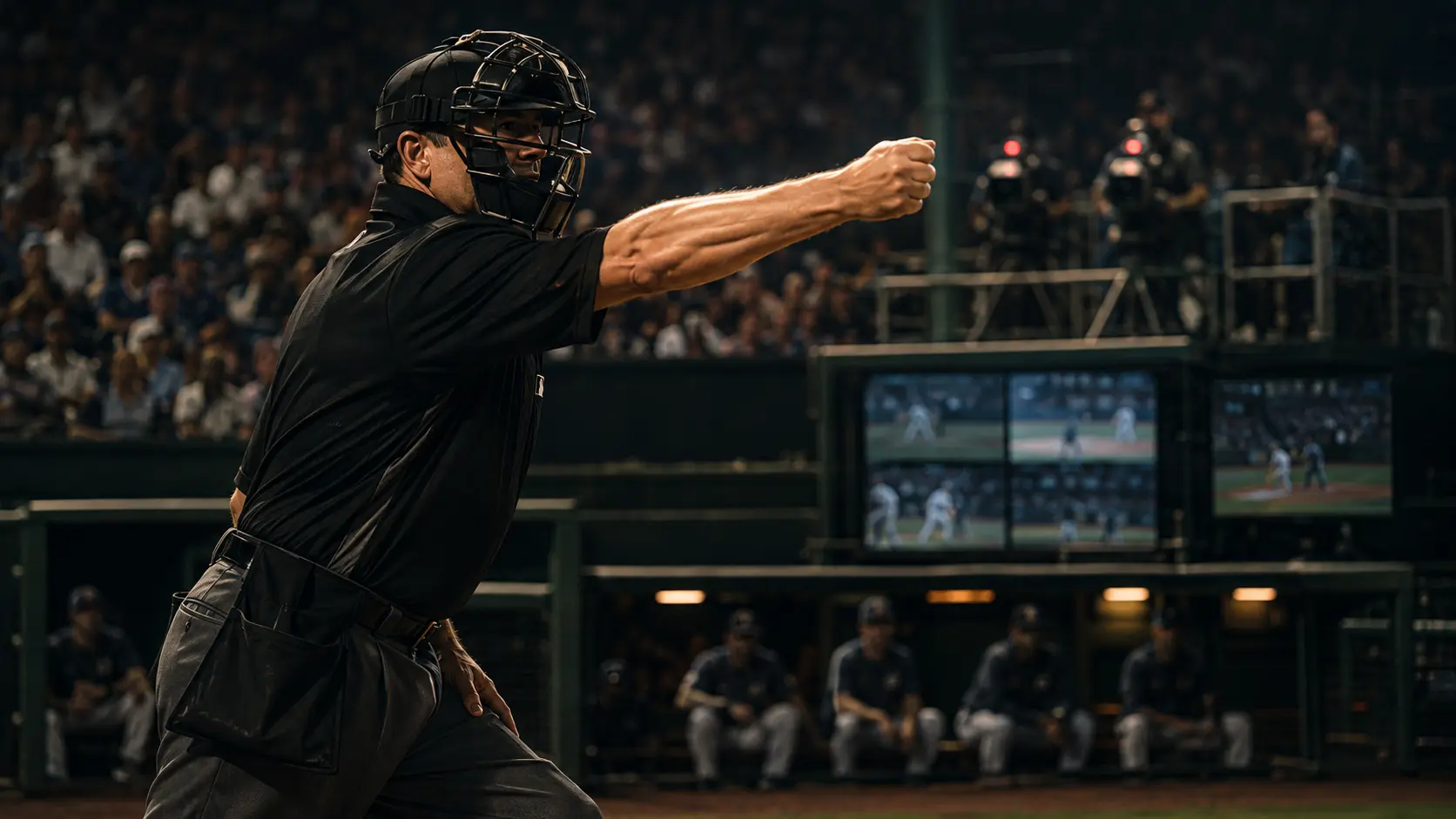
This past weekend, a friend from Ohio made the trip to Philadelphia to catch a Phillies game. Apparently, things had reached the point where crossing state lines was necessary to find a baseball team worth caring about. Hard to fault the decision.
There is something about a game in Philadelphia that is difficult to explain to anyone who has never spent much time around sports in this part of Pennsylvania. The crowd can spend six innings questioning every decision the team makes, turn on somebody they loved three days ago, and announce with absolute certainty that the season is finished sometime before Memorial Day. Then somebody from somewhere else joins in a little too enthusiastically and the relationship changes immediately. It is basically the sibling rule. Criticism has jurisdiction.
Our friend from Ohio understood the arrangement pretty quickly. He may be from the Midwest, but he was built for Philadelphia sports: loyal, sarcastic, appropriately skeptical, and perfectly capable of remaining personally offended by a bad call long after everyone else has moved on.
Bad calls behind the plate are a little different this season.
Major League Baseball introduced its Automated Ball-Strike Challenge System for 2026 after years of testing in the minor leagues, Spring Training, and the 2025 All-Star Game. The home-plate umpire still makes the initial call. If a pitcher, catcher, or batter disagrees, the player can immediately challenge it. Twelve Hawk-Eye cameras around the ballpark track the pitch, compare its location with the batter’s strike zone, and return an answer in roughly 15 seconds. Teams begin with two challenges and keep them when they are successful. MLB has deliberately described the system as a middle ground between fully automated balls and strikes and leaving every call entirely to the human umpire.
There is an interesting assumption built into that system.
Baseball now possesses technology capable of measuring a pitch with a degree of precision the umpire simply does not possess. The cameras have a margin of error measured in a fraction of an inch. They can reconstruct the path of a baseball moving close to 100 miles per hour and determine whether any portion of it touched a precisely defined strike zone.
Yet the introduction of that technology did not lead MLB to conclude that the umpire should somehow be capable of seeing exactly what twelve cameras and a computer can establish afterward. The umpire is still expected to make the call in real time. The technology enters later, with more information, a better vantage point, and none of the limitations that came with having to make the original decision.
Baseball seems perfectly comfortable acknowledging the difference.
When the camera is attached to a police officer, that distinction becomes much harder.
We Have Built a Replay Booth for Police Encounters
There may never have been a time when police conduct was more visible than it is today. A single encounter can be captured by several body-worn cameras, a patrol vehicle, a nearby business, a residential doorbell camera, traffic cameras, and multiple bystanders holding cellphones. In some critical incidents, investigators can eventually reconstruct a handful of seconds from more perspectives than any one person at the scene ever possessed.
That is, on balance, an extraordinary advancement.
There is no persuasive argument for returning to a world in which serious police encounters were reconstructed primarily through reports, witness recollections, and physical evidence when reliable video was unavailable. Cameras have exposed misconduct that deserved to be exposed. They have documented force that continued after a threat ended. They have contradicted reports and statements that did not accurately describe what occurred.
They have also done the opposite. Video has established that officers were truthful when allegations suggested otherwise. It has captured threats that some witnesses missed, documented resistance that later disappeared from someone’s recollection, and resolved factual disputes that once might have remained permanently uncertain.
That is what evidence is supposed to do. It should not have a preferred outcome.
The difficulty comes later, when the clarity provided by video begins to alter the way we think about the original event. The better we become at determining what happened afterward, the easier it becomes to believe that what we can now see must also have been clear to the person who was standing in the middle of it.
Consider the enormous difference between those two experiences.
An officer may experience an encounter once, at normal speed, while receiving radio traffic, moving around people or vehicles, listening to commands or witnesses, watching several sets of hands, communicating with other officers, and deciding which of several things occurring simultaneously deserves immediate attention. The information available may be incomplete, contradictory, or simply wrong. Then something happens. It may take three seconds.
The examination of those three seconds can take weeks or months.
By the time a serious incident reaches a command review, internal affairs investigation, prosecutor, attorney, expert, or court, the event can be slowed, enlarged, synchronized, transcribed, and compared against other recordings. Audio can be isolated. Individual frames can be examined. Surveillance video from another angle can be placed beside the body-worn camera. Physical evidence can be incorporated. Witness statements can be evaluated against facts that nobody knew when the event occurred.
All of that makes the investigation better.
It also creates a form of knowledge that did not exist at the scene.
Most importantly, everyone reviewing the incident already knows how it ends.
That advantage is so obvious that it is easy to underestimate. Once we know that the object in someone’s hand was a cellphone, it becomes remarkably difficult to watch the preceding video without seeing a cellphone. Once we know that the person never produced a weapon, earlier movements may appear less significant. Change the ending so that the person produces a firearm two seconds later, and those same preceding movements can suddenly appear ominous.
Nothing about the earlier movement changed. The recording did not change.
The viewer did, because the viewer now possesses information that did not exist when the decision was being made.
The Problem of Hindsight
Psychology has been studying this problem for decades. Baruch Fischhoff’s foundational work on hindsight bias demonstrated that once people know how an event turned out, they tend to perceive that outcome as having been more predictable beforehand. Later scholarship has continued to examine the phenomenon, including why people have difficulty fully disregarding outcome information once they possess it.
This matters far beyond policing. Medicine, aviation, military operations, workplace accidents, and countless other fields struggle with the same problem. A decision that was uncertain when it had to be made can look painfully obvious after the uncertainty has been removed.
Police use-of-force law contains an explicit warning about this problem.
In Graham v. Connor, the United States Supreme Court held that claims of excessive force under the Fourth Amendment must be evaluated under an objective reasonableness standard. The Court instructed that the reasonableness of a particular use of force must be considered from the perspective of a reasonable officer on the scene, rather than through the “20/20 vision of hindsight,” while recognizing that officers may sometimes be required to make decisions in tense, uncertain, and rapidly evolving circumstances.
That language has become so familiar in policing that there is a danger of treating it as a slogan rather than a standard.
Graham does not say that because an officer had to make a quick decision, the decision was therefore reasonable. It does not convert subjective fear into objective reasonableness, and it does not allow an officer to end the inquiry by saying, “I thought he had a gun.” An officer’s perception can be honestly held and still be objectively unreasonable. Poor tactics, available information, distance, lighting, movement, warnings, the actions of other officers, and changes in the threat can all matter.
The point is not that real-time decision-making deserves immunity from scrutiny.
The point is that retrospective scrutiny has to examine the decision that was actually available to be made, not a different decision constructed later from information that had not yet become known.
Video gives us dramatically better evidence with which to conduct that analysis.
It does not give us permission to change the analysis.
What the Camera Sees
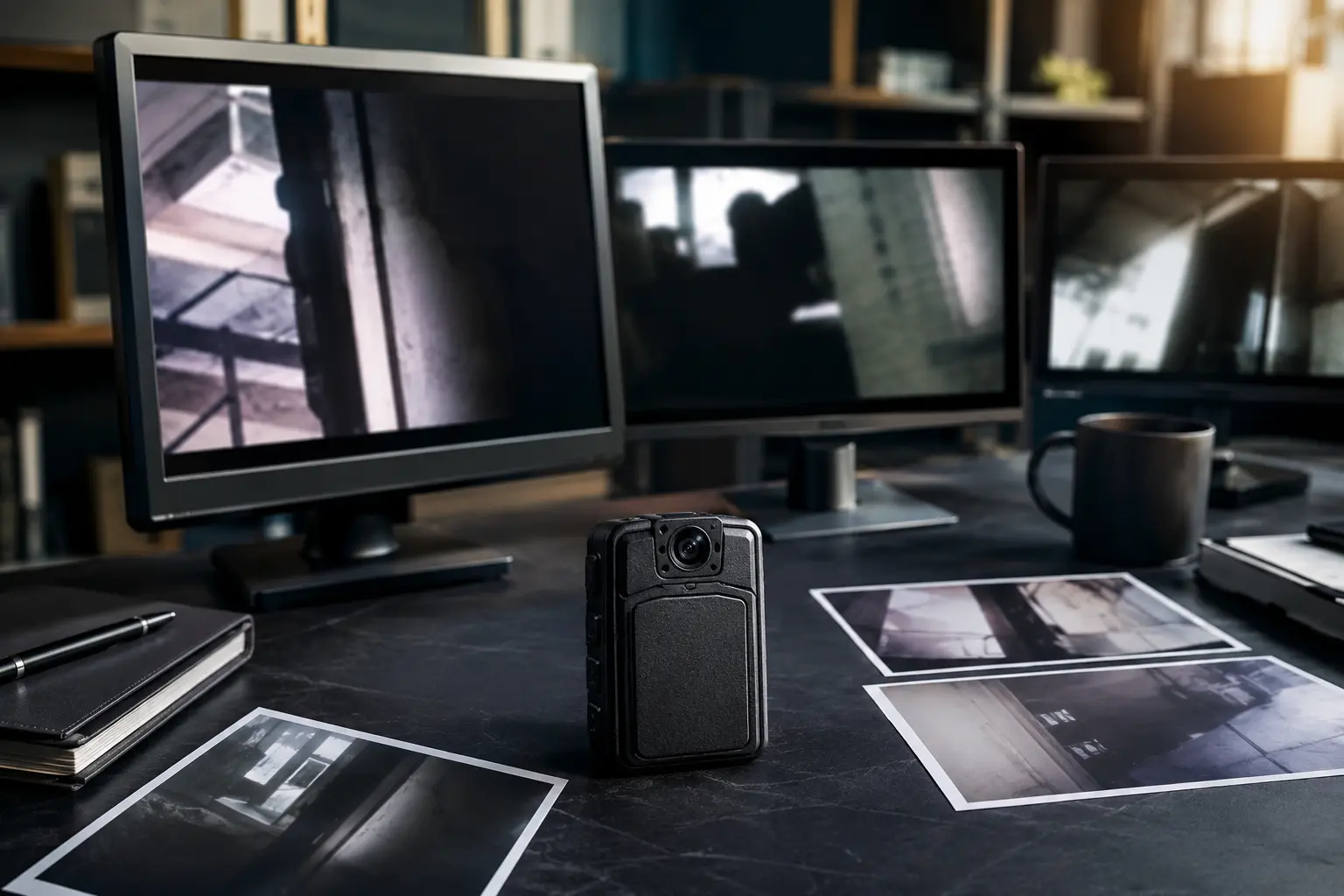
Body-worn camera footage presents another difficulty because of how easily the camera’s perspective can be confused with the officer’s perspective. The device is attached to the officer, often somewhere on the torso, and the resulting recording naturally feels as though the viewer is seeing the incident through the officer’s eyes.
That is not what the recording represents.
A camera captures whatever falls within the field of its lens. Human visual attention is more complicated. Eyes move independently of the torso. Heads turn. Attention shifts. People selectively concentrate on some stimuli while failing to process others that may technically have been visible. Auditory information competes with visual information. The fact that an object appears somewhere in a recording does not establish by itself that the person wearing the camera looked at it, recognized it, or had a meaningful opportunity to process its significance.
A 2024 study published in Police Practice and Research attempted to examine that difference directly. Murray and colleagues used eye-tracking, head-movement data, and body-worn cameras with 44 active-duty officers completing a simulated use-of-force scenario. The researchers reported low correlations between the position data from the body cameras and eye cameras. Officers visually attended to 80.5 percent of identified critical incidents in the scenario, while the body cameras captured 66.2 percent.
That study should be read with appropriate restraint. Forty-four officers completing a simulation cannot establish a universal rule for real-world police encounters, and several of the researchers were affiliated with Force Science. The study itself was also later subject to a correction involving one of its figures. Those considerations do not erase the research, but they are relevant when deciding how broadly to generalize from it.
Fortunately, the useful conclusion does not require a sweeping claim.
A body-worn camera’s field of view and an officer’s visual attention should not automatically be treated as the same thing.
That proposition also makes operational sense. A chest-mounted camera may capture an object below an officer’s extended arms that the officer’s eyes never see. A bystander standing 30 feet away may have an unobstructed view of a person’s right hand while a vehicle blocks that same hand from the officer standing six feet away. Another officer approaching from the opposite direction may see something neither of them sees. A surveillance camera above the scene may provide an excellent view of positioning while capturing none of the conversation that shaped the encounter.
Every recording can be accurate and still be incomplete.
The question becomes even more complicated when we consider not only what cameras record, but how camera perspective influences the people who later watch the footage.
Turner, Caruso, Dilich, and Roese examined that issue across eight experiments involving 2,119 participants. They found that participants viewing body-camera footage attributed less intentionality to the camera wearer than participants viewing dash-camera footage of the same conduct. Their experiments suggested that visual salience, including whether the focal actor could actually be seen in the frame, influenced observers’ judgments of intent.
Other research has produced a more complicated picture. Jones, Crozier, and Strange found in one experiment that participants watching body-camera footage perceived an officer’s behavior as more justified and recommended more lenient punishment than participants watching surveillance footage. When the researchers examined additional encounters, however, the effect was not consistent across every scenario.
That inconsistency is not a weakness in the argument. It is the point.
The research does not support a simple claim that body-worn cameras inherently favor officers, inherently favor civilians, or produce some predictable bias in every viewer. What it does challenge is the assumption that video is psychologically neutral simply because it is mechanical.
A camera has a location. It has a field of view. Something is inside the frame and something else is outside it. One person may be visually prominent while another is barely visible. The viewer brings assumptions and knowledge to the recording as well.
Video may be objective in the limited sense that the camera does not intentionally choose a side.
The interpretation of video remains a human activity.
What Happened Is Not Always the Same as What Was Reasonably Perceived
This distinction is particularly important because police reviews often collapse two questions that should remain separate.
The first is factual: What actually happened?
The second is evaluative: What could the officer reasonably perceive, know, and understand when the decision was made?
Good video can be exceptionally powerful in answering the first question. It may conclusively establish where someone’s hands were, whether a person moved, what words were spoken, when force began, when force stopped, and whether an officer’s later description corresponds with the recorded evidence.
Those facts then become part of answering the second question. They do not eliminate it.
Suppose several cameras eventually establish beyond meaningful dispute that an object in someone’s hand was a cellphone. That is an important factual conclusion. The object was a cellphone.
If an officer used force based on a claimed belief that the object was a firearm, however, identifying the object after the incident does not finish the analysis. The review must still consider what the object looked like from the officer’s position, the distance and lighting, how it was being held or moved, what the officer knew before the encounter, what had been communicated by dispatch or other officers, what the subject had been doing, and how much time existed to process the information.
That does not mean accepting the officer’s claimed perception simply because the officer offers it.
The video may establish that the object was plainly identifiable. Another officer in essentially the same position may have identified it correctly. Dispatch may have provided information that makes the claimed perception difficult to reconcile with the circumstances. The officer may describe a movement that several recordings establish never occurred. The initial force may have been reasonable while subsequent force was not.
If the evidence undermines the officer’s account, the review should say so plainly.
Accountability does not require manufacturing uncertainty to rescue an explanation that the evidence will not support.
The same discipline has to work in the other direction. If information was discovered 42 minutes into the investigation, it cannot silently be inserted into the officer’s knowledge at second three of the encounter. If one camera provides a clear view that the officer physically could not have possessed, that perspective cannot simply be substituted for the officer’s. If slow motion reveals a distinction that was virtually impossible to perceive at normal speed, the reviewer has to recognize the difference between using slow motion to establish a fact and using it to evaluate a real-time perception.
This is where serious review becomes difficult.
It is also where serious review becomes meaningful.
What Baseball Gets Right
The comparison with baseball has obvious limits. A ball-strike call is not a police shooting. An umpire does not have to assess danger, human intention, resistance, rapidly changing behavior, or constitutional standards. The consequences are not comparable.
That is precisely why the comparison is useful.
Baseball has an unusually simple factual problem. A ball either touched a defined strike zone or it did not. Yet determining that answer with technological precision requires a network of twelve cameras, pitch tracking, player-specific measurements, and a computerized system that returns an answer after the human being has already made the original call.
MLB also understands exactly what its technology is answering.
The system determines where the baseball went. It does not determine whether the umpire is a competent person. It does not decide whether the umpire acted in good faith. It does not reconstruct why the umpire perceived the pitch as he did. It simply provides a more precise answer to a narrow factual question.
Police video frequently gets asked to do far more.
Reviewers want to know what happened, what the officer knew, what the officer saw, what the officer should have seen, whether the officer’s account is credible, whether a perception was objectively reasonable, whether the response was lawful, whether it complied with policy and training, and whether an action that was justified initially remained justified as the circumstances changed.
Those questions require evidence.
They also require judgment.
No amount of camera footage eliminates the distinction.
A More Disciplined Way to Review Video
For police agencies, internal affairs units, prosecutors, trainers, risk managers, attorneys, and command staff, the practical lesson should not be to become skeptical of video. If anything, agencies should become more rigorous about using it.
Every available recording should be obtained when the seriousness of the incident warrants it. Multiple cameras should be synchronized when possible. Radio transmissions, dispatch information, physical evidence, officer statements, civilian statements, and video should be examined together. Contradictions should be investigated rather than explained away, regardless of whose account they damage.
At the same time, the review should preserve the chronology of the original incident.
What information existed before the officer arrived? What did dispatch communicate? What did the officer learn at the scene? What could reasonably be seen from the officer’s physical position? What else was competing for attention? What happened immediately before the decision? At what precise point did an important fact become available?
That last question should be part of every serious video review:
When did this become knowable?
Not when did investigators discover it. Not when did the clearest camera capture it. Not when did the reviewer notice it on the sixth viewing.
When could the person whose decision is being evaluated reasonably have known it?
That question does not protect officers from accountability. It makes accountability more accurate.
If a recording proves that an officer’s account is false, the agency should be willing to say so. If the same recording establishes that an allegation against an officer is false, the agency should be equally willing to say that. If one camera makes an event appear indefensible and another angle provides critical information the first recording could not capture, both belong in the analysis.
There will also be cases where all of the available evidence still leaves uncertainty.
A credible review process has to tolerate that possibility.
Not every incident becomes simple merely because it was recorded.
Better Evidence Should Produce Better Judgment
The proliferation of cameras has been one of the most consequential changes in modern policing. It has created a level of visibility that previous generations of officers, supervisors, prosecutors, and community members could not have imagined. That visibility has improved accountability, strengthened evidence, exposed misconduct, protected officers from false accusations, and given agencies opportunities to learn from incidents that otherwise might have disappeared into a report file.
None of that should be surrendered.
But more video should demand more sophisticated analysis, not less.
The danger is not the camera. The danger is the certainty the camera can create after uncertainty has already disappeared.
Sometimes video will demonstrate that an officer missed something that should reasonably have been apparent. Sometimes it will establish that an officer’s explanation cannot be reconciled with the physical evidence. Sometimes it will show that the officer was right about something everyone initially believed was wrong.
And sometimes a camera will capture something with extraordinary clarity that the person standing in the middle of the incident never had a realistic opportunity to perceive.
The work is determining which of those circumstances actually occurred.
That is harder than watching the replay.
It is also what meaningful accountability requires.
Major League Baseball now uses twelve cameras and sophisticated tracking technology to determine whether a baseball moving through a defined space touched an invisible boundary above home plate. Baseball still recognizes that the umpire who made the original call did not possess the same information later available to the review system.
Police agencies are dealing with something infinitely more complicated. They are using video to evaluate human beings making decisions amid movement, noise, incomplete information, divided attention, uncertainty, and sometimes violence.
The cameras should absolutely be part of that review. Every relevant angle should be examined. Slow motion should be used when it helps establish a forensic fact. Frames should be enlarged when the factual question requires it. Officer accounts should be tested against objective evidence, not accepted because of the uniform. Civilian accounts should be tested by the same standard.
But when the inquiry shifts from what the camera eventually established to what someone reasonably should have perceived during the event, the review process has to remain conscious of the one advantage everyone in the room now possesses.
They already know how the story ends.
References
Fischhoff, B. (1975). Hindsight is not equal to foresight: The effect of outcome knowledge on judgment under uncertainty. Journal of Experimental Psychology: Human Perception and Performance, 1(3), 288-299.
Jones, K. A., Crozier, W. E., & Strange, D. (2020). Look there! The effect of perspective, attention, and instructions on how people understand recorded police encounters. Behavioral Sciences & the Law, 37(6), 711-731.
Murray, N. P., Lewinski, W., Allen, C., Sandri Heidner, G., Albin, M. W., & Horn, R. (2024). The eyes have it! Functional field of view differences between visual search behavior and body-worn camera during a use of force response in active-duty police officers. Police Practice and Research, 25(4), 490-497.
Turner, B. L., Caruso, E. M., Dilich, M. A., & Roese, N. J. (2019). Body camera footage leads to lower judgments of intent than dash camera footage. Proceedings of the National Academy of Sciences, 116(4), 1201-1206.
Graham v. Connor, 490 U.S. 386 (1989).
Major League Baseball. (2025-2026). Automated Ball-Strike Challenge System materials.